Indoor Plant Care Tips That Keep Every Plant Alive
Indoor plants thrive on nine basics: water only when the top inch of soil is dry, match light honestly to each plant's needs, prioritize drainage over pretty pots, boost humidity for tropicals, feed lightly and dust leaves regularly. The guide also fixes the 5 most common houseplant problems — yellow leaves, brown tips, legginess, pests and root rot.
Every plant lover has a shelf of shame — the dried-out fern, the leggy pothos, the succulent that somehow drowned. The truth is that most houseplant deaths aren't bad luck; they're small, fixable mistakes. These indoor plant care tips cover the handful of fundamentals that keep almost any plant alive: watering with intention, matching light honestly, and giving roots what they actually need.
Master these nine basics and you'll spend less time replacing plants and more time enjoying them.
1. Water Smarter, Not More
Overwatering kills more houseplants than every other cause combined. Roots need oxygen, and soggy soil suffocates them into rot. The fix is simple: check before you water. Push your finger two inches into the soil — if it's damp, wait. If it's dry, water thoroughly until it runs from the drainage holes, then empty the saucer.
Forget fixed schedules. Your home's light, humidity, and season matter more than the calendar. A snake plant in a dim corner might need water every three weeks; a fern in a bright bathroom might want it twice a week.
Pro tip: A cheap wooden chopstick pushed into the soil works like a cake tester — pull it out and if it comes up damp and dark, skip the watering can.
2. Match Light to the Plant, Honestly
"Bright indirect light" gets thrown around constantly, but here's what it means: a spot where the plant can see a wide patch of sky without sitting in direct sunbeams. East-facing windows are the gold standard. South and west windows are strong — keep sensitive plants a few feet back. North windows suit only true low-light plants.
Buy plants for the light you actually have, not the light you wish you had. Snake plants, ZZ plants, pothos, and cast iron plants genuinely tolerate dim corners. A fiddle-leaf fig in a dark hallway will decline no matter how much you love it.
3. Soil and Drainage Matter More Than the Pot
That pretty ceramic pot is secondary — the soil mix decides everything. Standard potting mix suffocates plants that want airy roots. For most houseplants, amend bagged mix with perlite or orchid bark (roughly 70/30) for drainage and airflow. Succulents and cacti need grittier mixes with extra sand or pumice.
And drainage holes are non-negotiable. If a decorative pot has no hole, use it as a cachepot: keep the plant in its nursery pot inside, and lift it out to water.
4. Humidity Is the Secret Weapon
Most popular houseplants are tropical — they evolved in 60%+ humidity while the average heated home sits around 30%. Brown crispy leaf edges are the classic complaint. Grouping plants together creates a humid microclimate, a pebble tray with water under the pot helps, and bathrooms and kitchens are natural humidity havens.
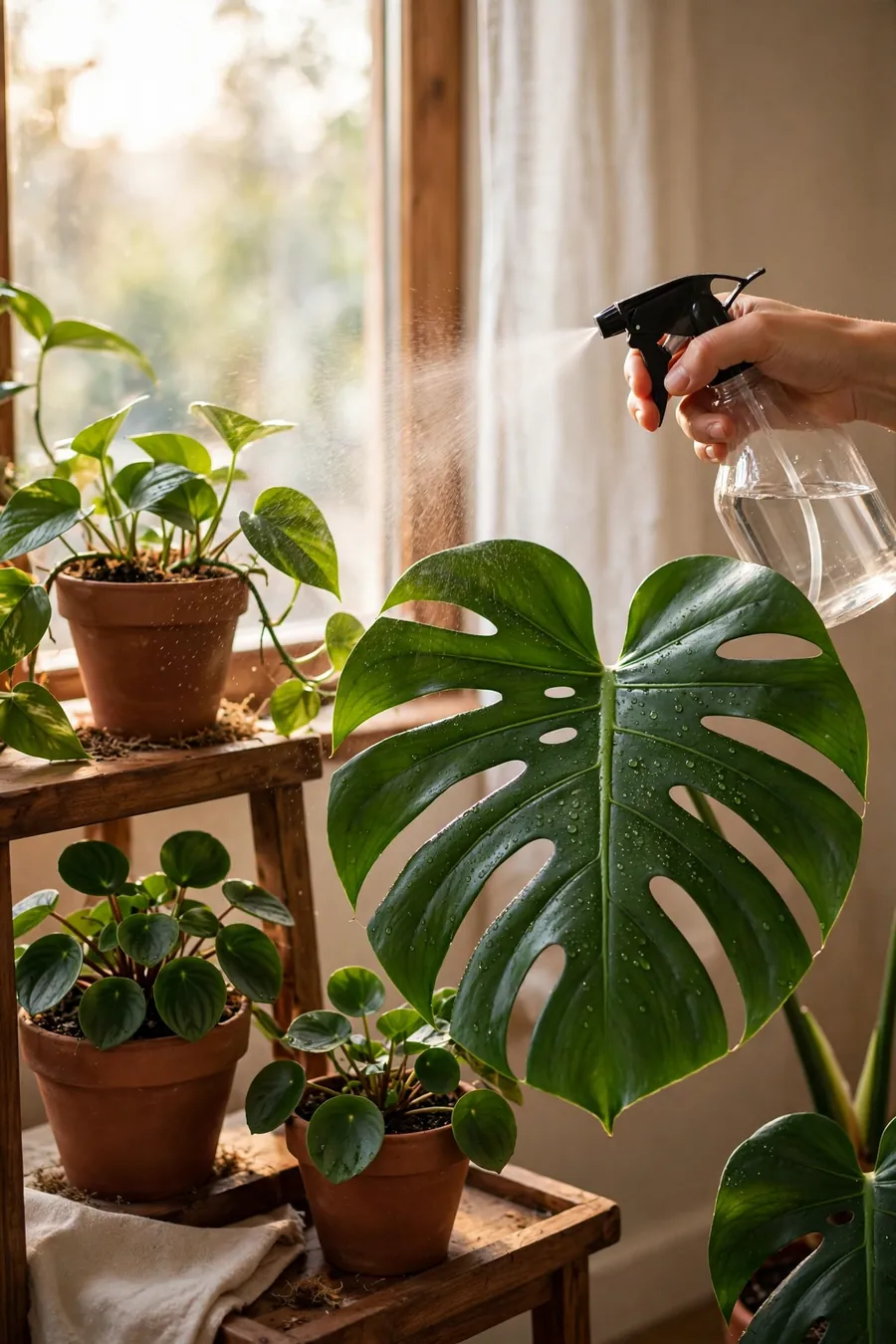
For serious collectors, a small humidifier near the plant corner beats daily misting — misting evaporates in minutes, but a humidifier changes the air itself.
5. Feed Lightly, Dust Regularly
Indoor plants are light feeders. A balanced liquid fertilizer at half strength, applied during the growing season (spring through early fall), is plenty. Skip fertilizer in winter when growth stalls — feeding a dormant plant causes salt buildup that burns roots.
Dust is the forgotten chore. A layer of dust on leaves blocks light and slows photosynthesis. Wipe large leaves with a damp cloth monthly, and give smaller plants a gentle shower in the sink every few weeks. Your plants will visibly perk up.
6. Fix the 5 Most Common Houseplant Problems
When something looks wrong, diagnose before you treat. Yellow leaves usually mean overwatering — check the soil before adding more water. Brown tips point to low humidity or inconsistent watering. Leggy, stretched growth with wide gaps between leaves means the plant is reaching for light — move it closer to a window.
Drooping can mean either too much or too little water, so feel the soil first. And small flying gnats mean fungus gnats breeding in damp topsoil — let the top two inches dry completely and add a layer of sand on the surface to break their cycle.
Beginner-friendly champions: pothos, snake plant, ZZ plant, spider plant, and philodendron. All five survive missed waterings, adapt to imperfect light, and tell you clearly when they need something.
7. Style a 2026 Botanical Corner
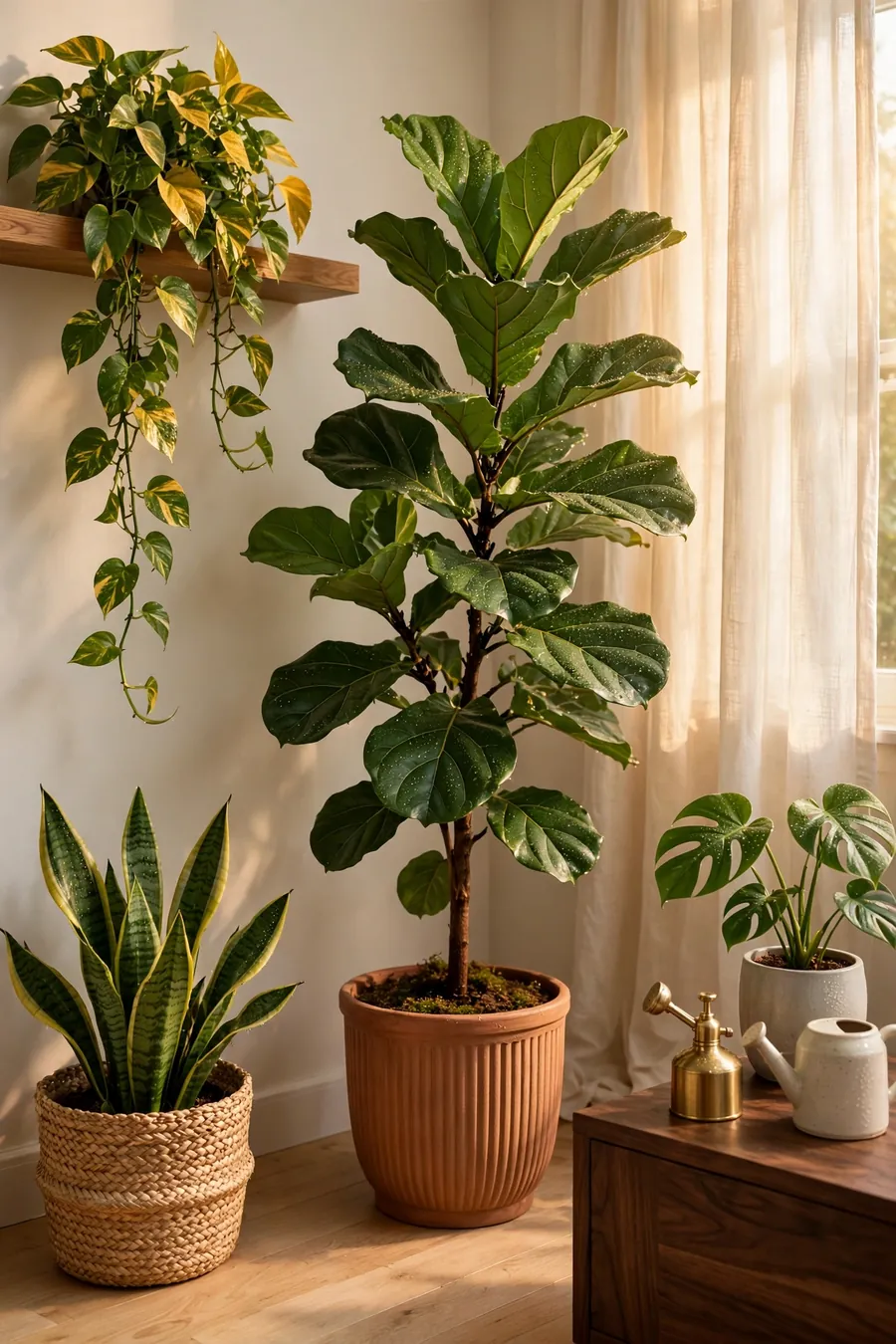
The big styling shift for 2026 is the botanical corner — plants arranged as a deliberate vignette instead of scattered solo pots. Anchor with one tall plant (fiddle-leaf fig, dracaena, or olive tree), add two or three medium pots at varied heights, and finish with a trailing vine on a shelf above. Mix pot materials — terracotta, woven seagrass, ribbed ceramic — for a collected look.
Keep the corner's light in mind: match each plant to that spot's real conditions, and add a warm floor lamp or grow bulb if the corner runs dark.
The Bottom Line
Great indoor plant care isn't about a green thumb — it's about observation. Check the soil, read the leaves, and adjust one thing at a time. Do that consistently, and the plants you buy this year will still be thriving next year.
Best Shade Trailing Plants That Forgive Beginners
Not every corner gets sun, and that's fine. Pothos tolerates near-darkness and tells you when it's thirsty — the leaves droop a little, you water, it perks back up. Heartleaf philodendron trails three feet in a year with almost no attention. Spider plants survive the kind of neglect that kills ferns; hang one high and let the babies dangle. The rule for all three: let the top inch of soil dry out between waterings, and skip the fertilizer in winter. If you've killed every plant you've owned, start here. These three are genuinely hard to kill.
How to Keep Indoor Plants Alive: The 5 Beginner Rules
If your plants keep dying, it's almost certainly one of these five things. One: be honest about your light — a north-facing window is low light, full stop. Two: water by touch, not by calendar; stick a finger an inch into the soil and water only when dry. Three: every pot needs drainage holes, no exceptions. Four: don't size up too fast — a pot 1–2 inches wider than the last is plenty. Five: let plants rest in winter — less water, no fertilizer. Follow these and even a self-described plant killer keeps things alive.
Shade Trailing Plants vs Bright-Light Trailers: Which Should You Buy?
Match the plant to your window and half your problems disappear. Low light (north window, dark corner): pothos and heartleaf philodendron — both trail 3+ feet and forgive missed waterings. Medium light: spider plant and trailing hoya. Bright indirect: string of pearls and string of hearts — gorgeous, but they rot fast in dim rooms, so only buy these if you have a bright east or west window. When in doubt, buy the pothos. It's the right answer 80% of the time.
Frequently Asked Questions
How often should I water indoor plants?
When the top inch of soil feels dry — typically weekly, but always check first. Overwatering kills more houseplants than underwatering; pots must have drainage holes.
What are the best low-light indoor plants?
Snake plants, ZZ plants, pothos and peace lilies tolerate low light. But low light still means a bright room — no plant thrives in a dark corner.
Why are my plant's leaves turning yellow?
Usually overwatering or poor drainage. Check that soil is not soggy, ensure the pot drains, and only water when the top inch is dry. Old lower leaves yellowing occasionally is normal.
What is the easiest indoor plant for beginners?
Pothos or a snake plant — both forgive missed waterings and adapt to varied light. Start with one, learn its rhythm, then expand your collection.